


Grease Compatibility (PDF)
The assumption that “grease is just grease” is one of the most expensive misconceptions in industrial maintenance. Grease is a sophisticated, precision-engineered lubricant consisting of a base oil, a thickener matrix, and performance additives. When two incompatible formulations mix within a bearing or gearbox, the chemical and physical bonds break down, leading to accelerated wear, mechanical seizure, and unplanned downtime.
Understanding grease compatibility is vital whether you are topping off an existing component, switching lubricant suppliers, or executing a plant-wide changeover.
Table of Contents
- Grease Compatibility Chart
- The Three Pillars of Grease Compatibility
- Debunking the Grease Colour Myth
- What Happens When You Mix Incompatible Greases?
- Grease Compatibility Chart
- When and How to Conduct Grease Compatibility Testing
- Plant Conversion Best Practices
- Protect Your Critical Machinery with Fluid Life
The Three Pillars of Grease Compatibility
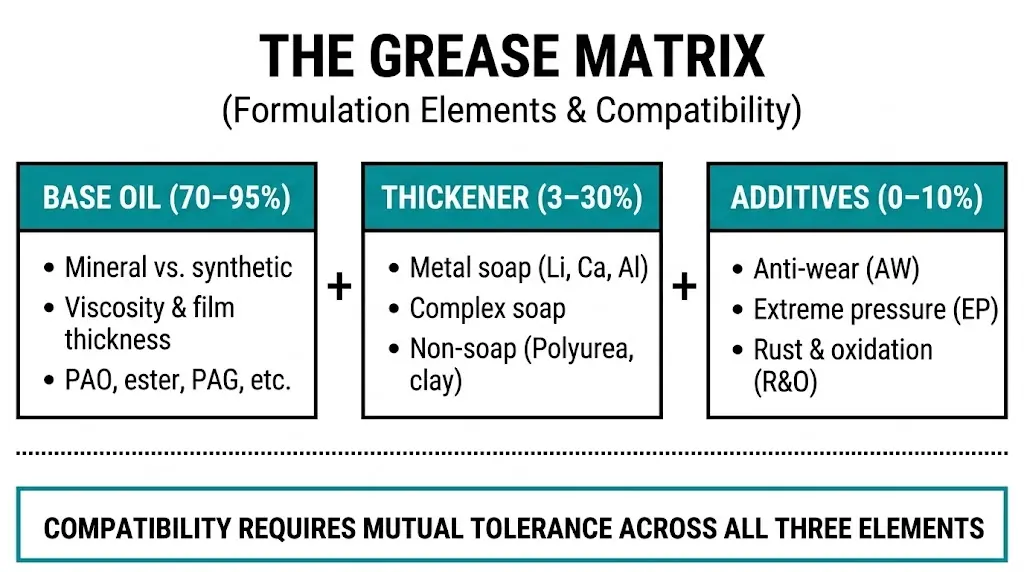
Grease compatibility depends on three distinct formulation elements: base oils, thickeners, and additives. Compatibility requires mutual tolerance across all three. If even one element clashes, the mixture will fail.
Key Takeaways
While compatibility charts provide a broad overview (e.g., Grease A and Grease B are generally compatible), individual brand formulations and their specific additive packages can still clash. Laboratory validation is highly recommended before mixing or converting products in your plant.
1. Base Oil Miscibility
The base oil comprises 70% to 95% of a grease’s total volume and provides the hydrodynamic lubricating film that separates moving metal surfaces.
- Mixing synthetic and mineral oil grease: Mineral oils are generally miscible with conventional Polyalphaolefin (PAO) synthetics. However, they are chemically immiscible with polar fluids such as polyalkylene glycols (PAG) and many silicone oils. Combining immiscible base oils causes instantaneous phase separation, starving the contact zone of the required lubricating film.
- Ester vs. PAO base oil grease compatibility: PAO synthetic hydrocarbons and synthetic esters are often blended intentionally by grease manufacturers to balance seal swell and cold-temperature mobility. However, certain high-viscosity or diester/polyol ester chemistries react poorly with specific PAO grades or their additive packages.
- Viscosity Mismatches: Even when two base oils are chemically miscible, mixing a high-viscosity base oil grease (e.g., ISO VG 460 for heavy, slow-speed mining bearings) with a low-viscosity base oil grease (e.g., ISO VG 100 for high-speed electric motors) yields an intermediate viscosity that is unsuitable for either design application.
2. Thickener Matrix Integrity
The thickener acts like a sponge, holding the base oil in suspension. Thickeners fall into two broad categories:
- Soap Thickeners: Formed through acid-base saponification reactions (e.g., lithium 12-hydroxystearate, aluminum complex).
- Non-Soap Thickeners: Formed using organic polymers or inert particulates (e.g., polyurea, organophilic bentonite clay, silica). This also includes advanced non-soap thickened greases like calcium sulfonate complex, which utilize overbased calcium sulfonates as the primary thickening agent.
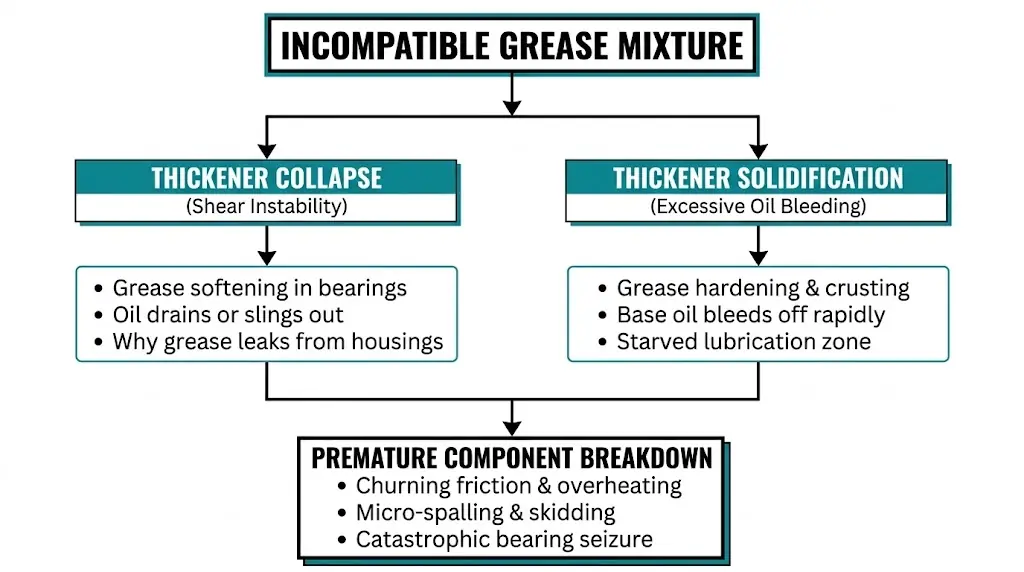
When two chemically divergent thickeners mix, they can neutralize or destabilize each other’s crystal lattice. This leads either to grease softening in bearings (the sponge collapses and the base oil leaks uncontrollably) or to grease hardening (the thickener solidifies into an immovable crust).
3. Additive Package Interference
Performance additives (anti-wear agents like ZDDP, sulphur-phosphorus extreme pressure [EP] additives, tackifiers, and rust inhibitors) compete for space on the component’s metal surfaces. Incompatible additive packages can:
- Antagonize each other, stripping away boundary lubrication layers.
- React chemically to form insoluble, abrasive precipitates.
- Accelerate oxidation and shorten grease service life.
Debunking the Grease Colour Myth
A common question from maintenance teams is: “Can I mix two red greases?” or “Is blue grease compatible with blue grease?”
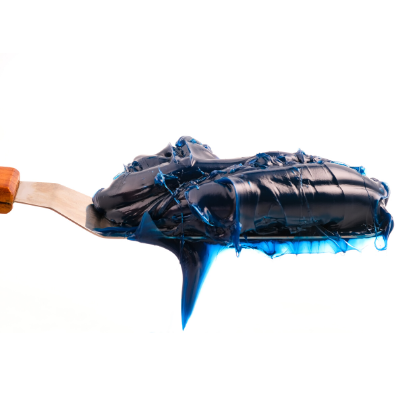
Critical Rule: Grease colour has zero correlation with thickener chemistry, base oil performance, or compatibility.
Grease manufacturers add organic dyes during blending for three practical reasons:
- Brand distinction: Helping a brand’s flagship product stand out on distributor shelves.
- Leak detection: Making line leaks or blown seals easy to spot on plant equipment.
- Application segregation: Helping technicians distinguish between general-purpose greases and high-temperature formulations within a single plant.
A red grease might use a lithium-complex thickener with mineral oil, while another red grease might use a polyurea thickener with synthetic PAO. Mixing them based on colour will compromise the asset. Always verify compatibility by examining the product data sheet (PDS) and safety data sheet (SDS) for actual thickener type and base oil viscosity—never rely on visual inspection.
What Happens When You Mix Incompatible Greases?
When you ask what happens if you use the wrong grease or mix greases, the answer lies in mechanical failure mechanisms. Incompatibility produces distinct, measurable symptoms:
Primary Signs of Grease Incompatibility
- Grease Softening in Bearings: As opposing soap or non-soap structures clash, the thickener matrix loses yield stress and structural shear stability. The grease drops from an NLGI 2 consistency down to a runny NLGI 0 or fluid NLGI 00.
- Why Grease is Leaking from Bearing Housing: Because softened grease cannot maintain its structural integrity, mechanical rotation forces it past labyrinth or contact-lip seals. When grease pools beneath bearing pillow blocks or when slings cross motor end-bells, thickener breakdown is often the root cause.
- Grease Hardening and Bleeding: In other pairings, chemical shock causes the thickener to contract and expel its base oil—a process known as static and dynamic syneresis (excessive oil bleeding). The separated base oil runs out of the housing, leaving behind a hard, caked residue of thickener and additive filler. This residue clogs grease ports, prevents fresh lubricant from reaching the raceway, and causes high friction and component seizure.
- Depressed Dropping Point: The dropping point is the temperature at which a grease transitions from a semi-solid to a liquid. Incompatible mixtures can see their dropping point plummet by 30°C to 100°C, causing high-temperature equipment to liquefy grease that previously ran reliably.
- Mixing Incompatible Grease Failure Symptoms: Elevated operating temperatures, surging motor vibration (due to rolling element skidding or cage pocket wear), abnormal acoustic emissions measured by ultrasound, and discoloured/burnt residue expelled through relief ports.
Grease Compatibility Chart
The chart below outlines general thickener compatibility based on laboratory testing and industry standards (including ASTM D6185).
Important: Formulations vary widely across lubricant brands, additive packages, and processing methods. Use this chart as an initial screening tool, and confirm critical or high-volume applications through laboratory testing.
Master Compatibility Matrix
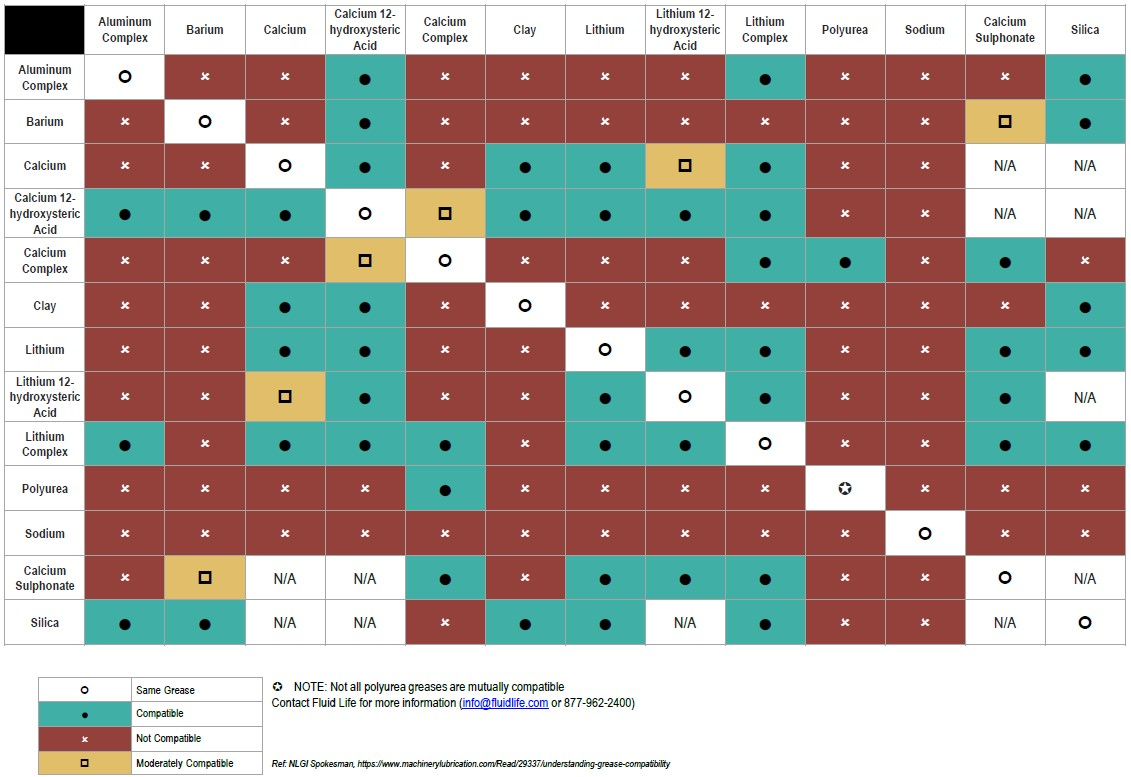
*Note: Not all polyurea greases are mutually compatible due to variations in aliphatic, aromatic, and diurea chemistry.
While compatibility charts provide a broad overview (e.g., Grease A and Grease B are generally compatible), individual brand formulations and their specific additive packages can still clash. Laboratory validation is highly recommended before mixing or converting products in your plant.
In-Depth Analysis of Common Thickener Pairings
Lithium Complex and Polyurea Compatibility
One of the most common—and catastrophic—mixing mistakes occurs between lithium complex and polyurea greases. Polyurea is popular in sealed-for-life electric motor bearings, while lithium complex is a staple multi-purpose grease across mobile equipment and plant machinery.
When mixed, the basic amine groups in traditional polyurea react with the lithium soap complex, breaking down the gel matrix. The resulting grease rapidly softens, drops its base oil, and leaks past bearing shields, leading to bearing starvation and winding contamination.
Calcium Sulfonate vs. Lithium Grease Compatibility
Over the last decade, high-performance calcium sulfonate greases have gained market share in heavy industry due to their inherent extreme pressure properties and water resistance. Fortunately, calcium sulfonate is broadly compatible with conventional lithium and lithium complex greases.
However, differences in base oil viscosity and additive chemistries can still degrade performance under heavy loads. Compatibility testing is strongly advised before converting large-scale mill bearings or mobile fleets.
Clay Thickener Grease Compatibility
Clay-thickened greases (such as organophilic bentonite) are non-melting, non-soap lubricants engineered for ultra-high-temperature environments like asphalt plants, kilns, and glass processing.
Clay thickeners work by mechanically trapping oil in an inorganic platelet network. Soap-based thickeners (lithium, aluminum, calcium) disrupt the polar bonds that keep the clay platelets suspended. Mixing clay grease with almost any soap-based grease collapses the suspension, causing the clay to settle into a hard, abrasive paste while the oil drains away.
Aluminum Complex Grease Compatibility
Aluminum complex greases offer exceptional water washout resistance and shear stability, making them standard in food-grade applications and steel mill roll necks.
Per the compatibility chart, aluminum complex greases are compatible with lithium complex and silica greases, but incompatible with plain lithium, calcium complex, clay, barium, and polyurea thickeners. Mixing them with incompatible thickeners causes rapid softening and loss of water resistance.
When and How to Conduct Grease Compatibility Testing
Compatibility charts provide a helpful starting point, but they cannot account for unique proprietary additive packages, thermal exposure, or variations in base oil manufacturing. When transitioning equipment to a new grease formulation, empirical verification is the safest path forward.
ASTM D6185: The Standard for Grease Compatibility Evaluation
Fluid Life evaluates binary grease mixtures using ASTM D6185 (Standard Practice for Evaluating Compatibility of Binary Mixtures of Lubricating Greases).
A standard ASTM D6185 evaluation tests three distinct ratios alongside the pure reference greases:
- 100% Grease A (Existing baseline product)
- 100% Grease B (Proposed replacement product)
- 50:50 Mixture (Represents worst-case intimate mixing in the housing)
- 90:10 Mixture (Represents early transition/residual grease in bearings)
- 10:90 Mixture (Represents late transition phase)
If the physical properties of any mixture fall outside the accepted limits of the baseline greases, the combination is classified as incompatible. In those cases, a full purge and flush must take place before introducing the new product.
Grease Qualification Testing for Plant Changeovers
Switching grease suppliers across a mill, refinery, mine, or manufacturing plant can involve thousands of bearing assets and hundreds of thousands of dollars in capital inventory.
A structured grease qualification program includes:
- Consolidation Analysis: Reviewing current grease formulations to eliminate redundant SKUs.
- Lab Compatibility Pre-Screening: Running ASTM D6185 testing on all incumbent vs. candidate grease pairings.
- Elastomer Compatibility (ASTM D4289): Confirming that the candidate base oils and additives will not shrink, harden, or swell existing bearing seals.
- Cleanliness Verification: Establishing baseline particulate and moisture targets for new inventory.
Plant Conversion Best Practices: How to Safely Switch Greases
When switching greases on production-critical machinery, follow this four-step transition protocol:
Step 1: Verify
Confirm compatibility via ASTM D6185 laboratory testing. If incompatible, plan for physical disassembly and solvent cleaning.
Step 2: Mechanical Expulsion & Purging
If physical cleaning is impossible, pump fresh grease into the housing while the equipment runs at operating temperature with the purge plug open, expelling old grease until fresh product appears.
Step 3: Temporarily Shorten Re-Greasing Intervals
Increase relubrication frequency by 50% for the first 3 to 6 months. This continuously expels mixed product and replenishes the uncompromised matrix.
Step 4: Intensify Condition Monitoring
Track bearing temperatures using infrared thermography, deploy ultrasound to detect early friction changes, and pull grease samples to monitor wear metals.
Protect Your Critical Machinery with Fluid Life
Selecting lubricants is a science, and guessing on compatibility puts equipment uptime at risk.
For more than 40 years, Fluid Life has helped industrial plants, mines, construction fleets, wind farms, and transportation operations maximize equipment life through advanced condition monitoring and laboratory testing.
With four modern lab facilities across Canada and the United States, staffed by over 100 reliability specialists, chemists, and lubrication engineers, we analyze fluid samples with an uncompromising commitment to precision. Our laboratory staff complete more than 1,300 hours of specialized training to ensure your results translate into practical, cost-saving decisions.
From our proprietary Sample Rank™ scoring to our integrated myLab asset management software, we provide the testing tools and engineering expertise needed to keep your facility running smoothly.
Our Grease Testing Laboratory Services Include:
- ASTM D6185 Grease Compatibility Analysis (dropping point, shear stability, penetration)
- Plant-Wide Lubricant Consolidation & Changeover Testing
- Routine Used Grease Analysis (wear debris, remaining antioxidant life, thickener degradation)
- Failure Analysis & Root Cause Determination for seized components
Need help evaluating a grease changeover or resolving a chronic bearing issue?
Talk with a Fluid Life reliability specialist today.
- Phone: 1-877-962-2400 (Toll-Free)
- Email: [email protected]
- Contact Form: Request a Grease Compatibility Testing Quotation